Moss Treatment Lawn Guide: Best Fixes for Shaded Lawns 2026

Moss thrives where grass struggles, and nowhere is that clearer than under trees, along north-facing fences, or beside a garden wall that blocks the sun from March through October. This guide covers moss treatment for shaded lawns specifically — what actually works when light, not just moss, is the underlying problem.

TL;DR
  • Iron sulphate blackens moss in 5-7 days but does nothing about the shade causing it — treat the cause, not just the symptom.
  • Moss treatment lawn success in shaded gardens depends on scarification plus a shade-tolerant seed mix, not chemicals alone.
  • Lawns getting under 4 hours of direct sun rarely hold a moss-free result past one season without ongoing management.
  • Combined moss killer and fertiliser products are a reasonable middle option but underperform on lawns with under 40% shade tolerance grass cover.

Why this matters

Moss doesn't invade healthy, sun-fed grass. It moves in where grass has thinned from lack of light, then thickens the shade problem further by smothering what growth remains. Treat the moss and ignore the shade, and it comes back within a year — often worse, because the grass underneath has weakened further while you were waiting for the moss killer to work.

The fix for a shaded lawn is different from the fix for a sunny one with drainage moss. Get the diagnosis wrong and you'll spend two seasons re-treating the same patch.

Who this is for

This is for homeowners dealing with moss under mature trees, along boundary fences, in narrow side gardens, or on any lawn that gets less than five or six hours of direct sun a day. If your lawn is open, sunny, and still growing moss, the cause is usually compaction or poor drainage rather than shade — a different problem with a different treatment plan, and one where a professional lawn care service like Lawnscience will diagnose the actual driver before recommending anything.

What to look for in moss treatment for shaded lawns

Speed of visible kill

Iron-based moss killers blacken moss within 5 to 7 days in most UK conditions, which matters because it tells you the product is active rather than inert on the shelf. A treatment that shows no colour change after two weeks isn't working, whatever the label claims.

Whether it tackles thatch and compaction

Shaded lawns build up thatch faster than sunny ones because slower grass growth means less natural breakdown of dead material at the soil surface. A thick thatch layer holds moisture right where moss wants it. If you're not sure how bad yours is, checking for a thatch problem before buying any product saves wasted spend on treatments that never reach the soil.

Shade tolerance of any overseed mix

Standard ryegrass blends need 5-6 hours of direct sun to establish properly. Fine fescue and shade-tolerant bentgrass mixes will hold on with as little as 3-4 hours, which is the difference between a lawn that recovers after treatment and one that reverts to moss by the following spring.

Disease risk after treatment

Shaded, damp lawns are more prone to fungal problems once you've disturbed the surface with scarification. Fusarium patch and snow mould both favour the same cool, moist, low-light conditions that favour moss in the first place, so timing your treatment around autumn and winter risk windows matters as much as the product you choose.

Timing against the UK growing season

Moss treatment lawn work in the UK follows two windows: an autumn pass in September-October and a spring pass in March-April. Treating mid-summer on a shaded lawn wastes the product, because moss growth slows in warm dry spells regardless of shade.

Realistic maintenance expectations

A lawn under permanent shade will never be moss-free forever on a single treatment. Look for a plan that includes repeat scarification or annual iron applications rather than a one-off product promising a permanent fix — that promise doesn't hold under a tree canopy.

Top picks for shaded lawn moss treatment

Iron sulphate moss killer — the fast burn. Blackens moss within 5-7 days and is the standard first move on any moss-affected lawn. It does nothing for the underlying shade or compaction, so it's a starting point, not a solution on its own. Buy as step one, but plan a follow-up.

Combined moss killer and fertiliser — the two-in-one. Feeds thin, shaded grass at the same time as killing moss, which helps grass compete for the space moss leaves behind. Underperforms where shade tolerance grass cover is already below 40%, because feeding grass that can't get enough light doesn't fix the light problem. Consider it as a maintenance product once the worst of the moss is cleared.

Scarification and aeration — the root fix. Physically removes thatch and dead moss, and opens compacted soil so water and air reach the roots. This is the step that actually changes conditions rather than just reacting to symptoms, and it pairs directly with a thatch problem diagnosis. Buy — this is the highest-impact single step for genuinely shaded lawns.

Shade-tolerant overseed — the long game. Fine fescue mixes fill bare patches left after scarification with grass that can actually hold ground under 3-4 hours of sun. Takes a full season to establish and won't show results by the following weekend. Consider for autumn 2026, timed straight after scarification.

DIY lawn sand alone — the budget option. Cheap and easy to apply, but lawn sand alone rarely reaches deep moss in a thatch-heavy, shaded lawn and needs frequent reapplication to hold any ground. On a lawn under heavy tree cover this is a short-term cosmetic fix at best. Skip it as a standalone plan for anything beyond light, occasional moss.

Get a shaded lawn moss plan sorted

Professional diagnosis and treatment for moss, thatch and shade-related lawn problems.

What to avoid

  • Moss killer with no scarification plan behind it. Killing the moss without removing the dead layer just leaves a thicker mat for next year's moss to root into.
  • Scarifying in the wrong season. Scarify a wet, shaded lawn in deep winter and you open it up to fusarium patch disease rather than healthy regrowth — stick to autumn or spring.
  • Standard ryegrass overseed under heavy canopy. It looks like the cheaper option at the garden centre, but it fails to establish under 3-4 hours of sun and you'll be reseeding again within a year.

Cool, damp, shaded turf going into a UK winter is also exactly where snow mould takes hold, so any late-autumn moss treatment should account for that risk rather than treat moss in isolation.

Verdict comparison

Treatment Kill speed Fixes root cause Best use case Verdict
Iron sulphate moss killer 5-7 days No First-response knockdown Buy
Combined killer + feed 7-10 days Partial Ongoing maintenance Consider
Scarification + aeration Immediate removal Yes Thatch-heavy shaded lawns Buy
Shade-tolerant overseed N/A (season-long) Yes Bare patches post-scarify Consider
Lawn sand alone Slow, patchy No Light, occasional moss Skip

FAQ

What is the best moss treatment lawn owners with shade should use?

The best approach combines an iron-based moss killer with scarification and a shade-tolerant overseed. Iron alone kills what’s there in 5-7 days but does nothing to stop moss returning under low light.

Is iron sulphate better than lawn sand for shaded lawns?

Iron sulphate works faster and more reliably on shaded lawns, blackening moss within 5-7 days versus lawn sand’s slower, patchier action. Neither fixes the underlying shade, so both need a follow-up plan.

How often should I treat moss on a shaded lawn?

Most shaded lawns need treatment twice a year, once in autumn (September-October) and once in spring (March-April), until grass cover improves enough to compete on its own.

Can grass ever grow moss-free under a tree?

A lawn under permanent heavy shade will rarely be fully moss-free, but shade-tolerant fescue mixes combined with regular scarification hold moss to a manageable minimum for most of the year.

Does scarifying make moss worse before it gets better?

Yes, scarifying pulls up dead moss and thatch, so the lawn looks torn up and bare for a few weeks immediately after. That’s the removal working, not a setback, provided it’s followed by overseeding.

What time of year is worst for treating moss in shade?

Mid-summer is the least effective window because moss growth slows in warm, dry weather regardless of shade. Deep winter is risky for scarification because it can open the lawn up to fusarium patch and snow mould.

Will more sunlight alone get rid of lawn moss?

Increasing light by thinning overhanging branches helps significantly, but on lawns that have gone thin and thatchy for years, a scarification and reseed plan is still needed to rebuild grass cover.

How much shade is too much for a normal lawn?

Under roughly 4 hours of direct sun a day, standard ryegrass struggles to establish. Below that threshold, shade-tolerant fescue mixes are the more realistic choice for lasting results.

One last thing

The detail most homeowners miss: moss under a tree is often a light problem disguised as a lawn problem. A single afternoon spent lifting the lower canopy of an overhanging tree by even a metre can shift a lawn from 3 hours of direct sun to 5, which changes every treatment decision that follows — sometimes more than the moss killer itself does.

Related guides

Checkout our latest FREE Guides

Leatherjacket grubs strip autumn lawns bare within weeks. Here's the 2026 leatherjacket lawn treatment that works, what to skip, and early warning signs.
Dog urine lawn patches fixed in 2026: flush, correct soil, reseed. See what to buy, what to skip, and when professional lawn treatment pays off.
Mole damage lawn repair compared: DIY reseeding, turf patching and professional aeration ranked with verdicts for UK lawns in 2026.
Moss treatment lawn guide for shaded gardens in 2026 — which products work, what to avoid, and why scarification beats moss killer alone under trees.
Moss control for a waterlogged lawn needs drainage fixes, not just spray. See what works in 2026, what to avoid, and when to bring in Lawnscience.
Lawn leatherjackets damage roots and attract birds. Learn the 2026 treatment window, nematode application steps, and how to stop them coming back.
Snow mould lawn treatment made simple: rake, aerate, feed and overseed step by step so your lawn recovers fully before spring 2026 growth kicks in.

Checkout our latest FREE Guides

Leatherjacket grubs strip autumn lawns bare within weeks. Here's the 2026 leatherjacket lawn treatment that works, what to skip, and early warning signs.
Dog urine lawn patches fixed in 2026: flush, correct soil, reseed. See what to buy, what to skip, and when professional lawn treatment pays off.
Mole damage lawn repair compared: DIY reseeding, turf patching and professional aeration ranked with verdicts for UK lawns in 2026.
Moss treatment lawn guide for shaded gardens in 2026 — which products work, what to avoid, and why scarification beats moss killer alone under trees.
Moss control for a waterlogged lawn needs drainage fixes, not just spray. See what works in 2026, what to avoid, and when to bring in Lawnscience.
Lawn leatherjackets damage roots and attract birds. Learn the 2026 treatment window, nematode application steps, and how to stop them coming back.
Snow mould lawn treatment made simple: rake, aerate, feed and overseed step by step so your lawn recovers fully before spring 2026 growth kicks in.
Request a Call back

Enter your details below to request a call back from us.

    Owning and running my Lawnscience Franchise is the best career move that I have ever made, and I wish I had done it 10 years ago! Nigel Bishop
    These are the questions that our customers ask most frequently.
    What our clients say...
    Felt sure the only remedy for our new house builder's lawn was to rip it up and start again! Lawnscience showed us other potential less drastic options and has made them a reality. Glad we consulted Lawnscience then, and very happy to continue to use…
    Mr Kenward
    What our clients say...
    Really friendly and knowledgeable team. My lawn was full of moss and weeds. Now It looks like a lawn should do. Green, lush and healthy.
    Trevor Dealey
    What our clients say...
    Lawnscience are always prompt and helped me keep on top of treatments for a newly laid lawn. Certainly takes the hassle away of burning grass etc when trying to add treatments yourself. Very good value for money. Nice guy.
    Mr Hamilton
    What our clients say...
    1st class service. Very knowledgeable on lawn care and how to improve our garden. Provided a course of action and a timetable to work to keep expectations high. Grass scarified and reseeded with great results
    Mr Murray
    What our clients say...
    Lawnscience provide a service of feeding the grass and killing the weeds and moss that are in all lawns. The treatment varies depending on the time of year. By using Lawnscience a minimum of four times a year our lawns have shown a vast improvement.
    Mr Knight
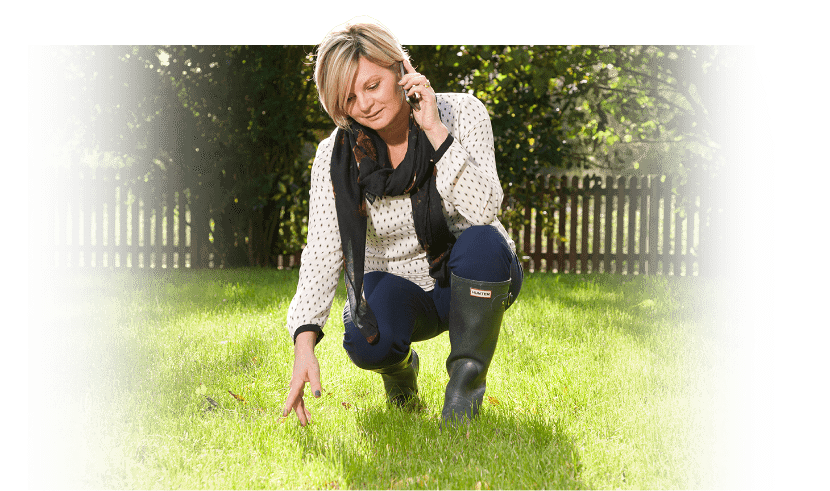
    Lady assesses lawn
    Request a Call back

    Enter your details below to request a call back from us.