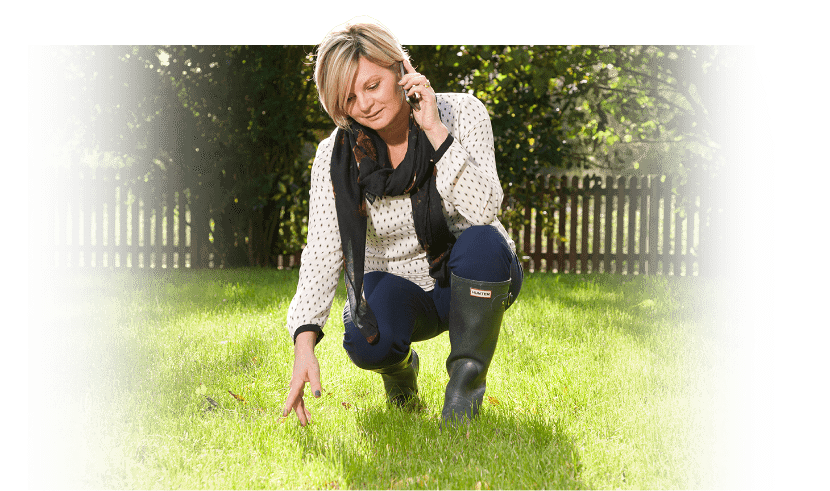
Grass Repairs for Bare Patches: What Works in 2026

Bare and thin patches don't fix themselves, and the grass repairs that work depend entirely on what killed the grass in the first place. This guide sorts UK lawns by cause and hands you the fix that actually matches it.

TL;DR
  • Diagnose the cause before buying seed – dog urine, moles, thatch and grubs all need different grass repairs.
  • Autumn (September) and spring (April-May) are the only reliable UK windows for grass repairs in 2026.
  • Seed spread on compacted or thatchy soil fails even in good weather – prep the surface first.
  • Leatherjacket grub damage peaks in autumn 2026 and needs treating before you overseed, not after.
  • Shaded strips and dog-run patches need different seed mixes, not the same bag from the shed.

Why this matters

Most homeowners see a bare patch and reach for a bag of seed. That's the wrong first move, because seed thrown on the wrong problem just dies again in six weeks. A patch caused by thatch build-up behaves nothing like a patch caused by grubs, moles, or a dog that always uses the same corner of the lawn.

Grass repairs done in the right order – diagnose, treat the cause, prep the soil, then seed – hold. Grass repairs done backwards get redone every spring. That's the pattern Lawnscience sees across UK gardens every 2026 growing season: same bag of seed, same bare patch, because nobody dealt with what killed the grass.

Who this is for

This is for homeowners staring at one or more bare or thinning patches right now – dog urine burns on a corner lawn, a scatter of mole mounds, a shaded strip under a fence line that never fills in, or general thinning after a hard winter. If your whole lawn looks tired and mossy rather than patchy in specific spots, you're better served by a full moss or scarification treatment than a patch repair.

What to look for in grass repairs for damaged lawns

An actual diagnosis, not a guess

Before any seed goes down, work out whether you're dealing with urine scorch, grub damage, mole disturbance, disease, or simple wear. Each cause needs a different first step, and skipping this is the single biggest reason repairs fail twice.

Timing that matches UK grass growth

Grass seed needs soil temperatures above roughly 8-10degC and consistent moisture to germinate. In the UK that means early-to-mid autumn or April through May 2026 – seeding in July heat or December cold wastes the seed and your effort.

Soil contact, not just soil coverage

Seed sitting on top of thatch or compacted ground can't reach soil, and seed that can't reach soil can't grow roots. Aeration or light scarification before overseeding turns a scattergun approach into one that actually takes.

A seed mix suited to the site

A shaded strip under a hedge needs a shade-tolerant ryegrass and fescue blend, not a standard sun-loving mix. Using the wrong mix on a shaded or heavy-traffic patch is why some repairs green up for a fortnight then vanish again.

Aftercare for the first four weeks

Newly seeded grass needs light, frequent watering – little and often, not one heavy soak a week – until germination, then a gradual step-down as roots establish. Mowing too early, before the new grass has had 3-4 cuts' worth of growth, tears out seedlings before they've rooted.

Not sure what’s causing your bare patches

Get a lawn assessment from your local Lawnscience expert.

Top picks: matching the repair to the cause

The localised burn – dog urine patches

The giveaway is a ring of darker, lusher grass around a dead or yellow centre, usually in one or two spots the dog favours. Nitrogen concentration in urine scorches the grass at the point of contact while feeding the grass around it. Treating dog urine patches properly means flushing the salts out of the soil before reseeding, not just laying fresh turf over scorched ground. Verdict: Fix now – urine damage spreads to new spots if the dog's habits don't change too.

The volcano problem – mole damage

Mole mounds and the collapsed tunnels beneath them leave uneven, sunken patches that seed poorly because the disturbed soil won't hold moisture evenly. Repairing mole-damaged lawns starts with settling and firming the soil, then filling and reseeding once activity has stopped – reseed too early and the ground shifts again under the new grass. Verdict: Fix now, but only after the moles have actually moved on.

The north-facing strip – shaded thin patches

Grass under trees, fences, or on the north side of a house thins out gradually rather than dying outright, because it's starving for light rather than being actively killed. Overseeding for shaded lawns with a fescue-heavy shade mix, timed for autumn 2026 when light angles are lower anyway, gets far better takeup than fighting the shade with a standard mix. Verdict: Consider – if the shade is dense year-round, expect thinner grass permanently even after repair.

The autumn crater – leatherjacket grub damage

Spongy, easily-lifted turf with birds pecking at the lawn in September and October points to leatherjacket grubs feeding on roots underground. Treating the grub population comes before any reseeding attempt, because new seedlings get eaten before they establish. Verdict: Treat first, seed second – autumn 2026 is peak activity season for this one.

What to avoid

  • Seeding straight onto thatch or compacted soil. It looks like you've done the job, but germination rates drop sharply without soil contact, and most of the seed just sits there.
  • Treating the symptom instead of the cause. Reseeding a urine patch without addressing the dog's routine, or a grub patch without treating the grubs, means redoing the same repair every year.
  • Seeding in a heatwave or a hard frost. Grass seed germinates in a narrow temperature window – outside it, you're feeding birds, not growing grass.

"If the seed can't touch soil, it can't grow roots."

“If the seed can’t touch soil, it can’t grow roots.”

Verdict comparison

Cause Fix First Timing Window Verdict
Dog urine patches Flush salts, then reseed Anytime soil temp allows Fix now
Mole damage Settle soil after activity stops Once moles have moved on Fix now
Shaded thin patches Shade-tolerant overseed mix Autumn 2026 Consider
Leatherjacket grubs Treat grubs before seeding September-October Treat first
General thinning/wear Aerate, then overseed Spring or autumn 2026 Fix now

FAQ

What’s the best time of year for grass repairs in the UK?

Early autumn, roughly September into October, is the best window for grass repairs in 2026 because soil is still warm and rainfall is more reliable. April through May is the second-best option if autumn is missed.

How long does it take for a bare patch to fill in after repair?

Most grass repairs show germination within 7-21 days and reach a mowable height by 4-6 weeks, depending on temperature and watering. Full thickening to match the surrounding lawn can take a full growing season.

Is overseeding better than laying turf for small patches?

Overseeding is usually the better fix for patches under a square metre because it blends into the existing lawn rather than leaving a visible seam. Turf makes more sense for larger, all-at-once repairs.

Do I need to treat the soil before reseeding a bare patch?

Yes, if the patch is caused by compaction or thatch, aeration or light scarification before seeding is what makes the repair stick. Skipping this step is the most common reason a repaired patch dies back again.

Why does the same patch keep dying back after I reseed it?

The underlying cause – urine, grubs, moles, shade, or compacted soil – hasn’t been dealt with, so new grass fails for the same reason the old grass did. Diagnosing the cause before reseeding fixes this.

Can I repair a lawn patch in summer?

You can, but germination is far less reliable above roughly 25degC without heavy irrigation. Autumn or spring 2026 give you a much better success rate for grass repairs than a July attempt.

What causes circular dead patches with a green ring around the edge?

That pattern is the classic sign of dog urine scorch, where nitrogen concentration kills the centre while feeding the ring around it. Flushing the soil before reseeding stops the pattern repeating.

Should I treat grubs before or after reseeding a damaged lawn?

Treat the grubs first. Reseeding before dealing with an active leatherjacket population just feeds new seedlings to the grubs, and the patch fails again within weeks.

One last thing

The patch that never fills in is rarely a seed problem – it's almost always a soil or cause problem that's been reseeded over instead of solved. Sort the cause first and the grass repairs part gets a lot easier in 2026.

Related guides

Checkout our latest FREE Guides

Bare and thin lawn patches need different grass repairs depending on the cause. Lawnscience breaks down fixes for urine, moles, thatch and grubs in 2026.
A spring lawn treatment programme for 2026: the right order for moss control, aeration, scarification and overseeding, with soil-temperature triggers.
New lawn care in the first year: watering, mowing timing, feeding and weed control for 2026, plus mistakes that stall establishment. Follow this to avoid patchy grass.
Lawn treatment for new build gardens: fix compacted subsoil with aeration first, overseed patches, treat moss. 2026 verdicts on what to buy and skip.
Learn when to scarify your lawn in 2026: check thatch depth, soil temperature, and moss cover before you rake. Spring and autumn windows explained clearly.
Overseeding after scarification: seed rates, timing, soil temperature and the mistakes that stop new grass establishing. UK lawn advice for 2026.
Overseeding a shaded lawn in 2026 fails without moss treatment, fine fescue seed and proper prep. See what works and what to skip before you sow.

Checkout our latest FREE Guides

Bare and thin lawn patches need different grass repairs depending on the cause. Lawnscience breaks down fixes for urine, moles, thatch and grubs in 2026.
A spring lawn treatment programme for 2026: the right order for moss control, aeration, scarification and overseeding, with soil-temperature triggers.
New lawn care in the first year: watering, mowing timing, feeding and weed control for 2026, plus mistakes that stall establishment. Follow this to avoid patchy grass.
Lawn treatment for new build gardens: fix compacted subsoil with aeration first, overseed patches, treat moss. 2026 verdicts on what to buy and skip.
Learn when to scarify your lawn in 2026: check thatch depth, soil temperature, and moss cover before you rake. Spring and autumn windows explained clearly.
Overseeding after scarification: seed rates, timing, soil temperature and the mistakes that stop new grass establishing. UK lawn advice for 2026.
Overseeding a shaded lawn in 2026 fails without moss treatment, fine fescue seed and proper prep. See what works and what to skip before you sow.
Request a Call back

Enter your details below to request a call back from us.

    Owning and running my Lawnscience Franchise is the best career move that I have ever made, and I wish I had done it 10 years ago! Nigel Bishop
    These are the questions that our customers ask most frequently.
    What our clients say...
    Felt sure the only remedy for our new house builder's lawn was to rip it up and start again! Lawnscience showed us other potential less drastic options and has made them a reality. Glad we consulted Lawnscience then, and very happy to continue to use…
    Mr Kenward
    What our clients say...
    Really friendly and knowledgeable team. My lawn was full of moss and weeds. Now It looks like a lawn should do. Green, lush and healthy.
    Trevor Dealey
    What our clients say...
    Lawnscience are always prompt and helped me keep on top of treatments for a newly laid lawn. Certainly takes the hassle away of burning grass etc when trying to add treatments yourself. Very good value for money. Nice guy.
    Mr Hamilton
    What our clients say...
    1st class service. Very knowledgeable on lawn care and how to improve our garden. Provided a course of action and a timetable to work to keep expectations high. Grass scarified and reseeded with great results
    Mr Murray
    What our clients say...
    Lawnscience provide a service of feeding the grass and killing the weeds and moss that are in all lawns. The treatment varies depending on the time of year. By using Lawnscience a minimum of four times a year our lawns have shown a vast improvement.
    Mr Knight
    Lady assesses lawn
    Request a Call back

    Enter your details below to request a call back from us.