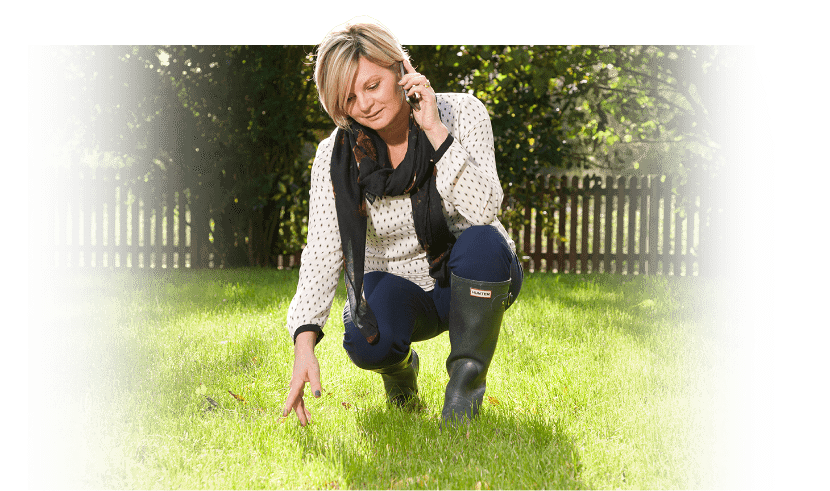
Best Lawn Treatment for Small Gardens in 2026: What Works

Small city gardens don't need less lawn treatment than a country plot – they need it aimed at different problems entirely: shade from fences and neighbouring walls, soil compacted by builders or bins, and grass that takes the same daily footfall as a lawn four times its size.

TL;DR
  • Lawn treatment for small gardens works best when shade and compaction get treated before feed – Lawnscience’s moss treatment for shaded lawns is the safe pick for courtyard plots under trees or fences.
  • New-build and terraced gardens often sit on rubble-compacted subsoil, so lawn aeration for clay soil gardens is a Buy wherever water pools or grass thins in patches.
  • Skip supermarket weed and feed on lawns under 25 square metres – patchy sun means patchy results and scorched grass near walls.
  • Overseeding for shaded lawns fixes thin strips under fences faster than reseeding alone, a Consider for gardens getting under four hours of direct sun.
  • Weed control for pet-friendly lawns is the right call for small, high-traffic gardens shared daily with kids or dogs.

Why this matters

A small lawn concentrates every problem a big lawn gets to spread out. Four hours of shade from next door's extension falls across the whole plot, not just one corner of it. A dog running the same 20 square metres every day compacts soil faster than the same dog would on half an acre. Builders' rubble left six inches under the topsoil after a loft conversion or patio job blocks drainage for the entire garden, not a section of it.

That's why generic lawn advice built for open, sunny gardens underperforms in cities. Lawnscience's lawn treatment programmes are scaled and timed differently for small, shaded, high-traffic plots, and in 2026 that distinction matters more than ever as more UK households garden on courtyard-sized plots attached to terraces, new-builds and converted flats.

Who this is for

This guide is for anyone with a lawn under roughly 40 square metres hemmed in by fences, walls or a building extension – typical of Victorian terraces, new-build estates and converted townhouses. It's for gardens that get partial sun at best, see daily foot traffic from kids or dogs in a tight footprint, and often sit on soil disturbed by recent construction. If the biggest problem with your lawn is "there isn't much of it, and what there is looks tired," this is the guide.

What to look for in lawn treatment for small gardens

Shade tolerance built into the programme

A plan designed for full sun fails fast where fences, walls or a two-storey extension cut light for half the day. Products and timing need to account for reduced photosynthesis, not just a standard feed schedule copied from an open field. This matters more in cities than almost anywhere else – a north-facing courtyard can lose six hours of light a lawn on an open plot never would.

Handling for compacted or clay-heavy soil

Small gardens near new builds and renovations often sit on subsoil compacted by machinery, or with rubble left close to the surface. Aeration needs to reach that compaction layer, not skim the top two inches. Skip this step and every other treatment – feed, seed, weed control – underperforms because roots never get down far enough to use it.

Low-disruption scarification and aeration methods

A full-size scarifier built for a quarter-acre lawn will scalp a small garden and leave bare soil with nowhere to hide while it recovers. Small lawns need methods and machinery scaled to the space, so recovery time and mess stay proportional to the job rather than dwarfing it.

Pet and child safety on treated turf

Small gardens get used hard by the people and animals living around them – there's no far corner to avoid while a treatment settles in. Re-entry times and product choice need to work for a lawn that's back in daily use within hours, not days, because a small garden has no spare patch to redirect traffic onto.

Programme and pricing scaled to square footage

A treatment plan priced and dosed for an average UK lawn wastes product and money on a 20 square metre plot. Programmes should scale down in application rate and cost together, not just get a flat discount slapped on a full-size dose.

Top picks for small city garden lawns

Every pick below targets a specific small-garden problem rather than treating the lawn as a scaled-down version of a countryside plot – that distinction is the whole point of lawn treatment for small gardens in 2026.

The shade fix

Spec that matters: built for lawns getting under four hours of direct sun a day.
Moss thrives exactly where small city lawns struggle most – shaded corners against fences and walls where grass thins out first. Moss treatment for shaded lawns targets that combination directly instead of treating moss as a standalone problem separate from the light issue causing it. Verdict: Buy for any courtyard or terrace lawn losing more than half the day to shade.

The soil unlocker

Spec that matters: reaches compaction sitting 4-6 inches below the surface.
Gardens behind new-builds or recent extensions often carry a compacted layer from construction traffic that ordinary surface aeration doesn't touch. Lawn aeration for clay soil gardens is built for that depth of compaction rather than a light pass that looks like a fix but changes nothing underneath. Verdict: Buy wherever water sits on the lawn more than an hour after rain.

The thin patch rescue

Spec that matters: rebuilds density in strips as narrow as 30cm along boundary lines.
Shade doesn't just cause moss – it thins grass along fence lines until there's more bare soil than blade. Overseeding for shaded lawns is scaled for exactly that narrow, low-light strip rather than a whole-lawn reseed that wastes seed on areas that were never the problem. Verdict: Consider if thinning is limited to boundary edges rather than the whole plot.

The traffic guard

Spec that matters: re-entry safe for pets and children within hours, not days.
Small lawns get walked, played and dug on every single day – there's no spare patch to rest while treatment settles in. Weed control for pet-friendly lawns is formulated with that daily reality in mind rather than assuming the lawn can be fenced off for a week. Verdict: Buy for any small garden shared with dogs or young kids.

Lawnscience also runs seasonal lawn treatment programmes that combine these fixes into one schedule instead of four separate call-outs, which matters more on a small lawn where every visit disrupts the whole space, not just one section of it.

Get a lawn treatment plan for your garden

Talk through your garden’s shade, soil and traffic before booking a programme.

What to avoid in a small city garden

  • Full-size scarifiers on tiny lawns. A machine built for a quarter-acre plot scalps a 20 square metre lawn and leaves it bare for weeks with nowhere to hide the recovery, unlike a larger lawn where the untreated areas mask the damage.
  • Generic weed and feed granules under partial shade. These are dosed assuming even sun exposure across the whole lawn – patchy light means patchy uptake, scorched patches near walls, and wasted product that never gets used evenly.
  • Heavy top dressing on a lawn that already drains poorly. Piling sand or soil onto a small, waterlogged plot without checking drainage first traps moisture instead of fixing it, and there's no low corner to catch the overflow on a small footprint.

Overdosing does more damage than underdosing in a space this size, because there's no untouched section of lawn left to dilute the mistake.

“In a small shaded garden, overdosing does more damage than underdosing ever will.”

Verdict comparison

The table below matches each Lawnscience pick to the small-garden problem it actually solves, rather than ranking them against each other as if they compete.

Pick Best for Key benefit Verdict
Moss treatment for shaded lawns Fenced or walled courtyards Targets shade-driven moss directly Buy
Lawn aeration for clay soil gardens New-build and renovated gardens Breaks up compaction from building work Buy
Overseeding for shaded lawns Thin strips along fences and walls Rebuilds density in narrow low-light zones Consider
Weed control for pet-friendly lawns Gardens used daily by kids or dogs Short re-entry time, daily-use safe Buy

FAQ

What’s the best lawn treatment for a small city garden?

The best approach combines shade-specific moss treatment with aeration for compacted soil, since most small city lawns fight both problems at once. Standalone weed and feed plans built for open, sunny lawns underperform on tight, shaded plots in 2026 the same way they did a decade ago.

Is scarification safe for a very small lawn?

Scarification is safe for a small lawn only when the equipment and depth are scaled down to match the space. A full-size machine built for larger lawns can scalp a small plot and leave it bare for weeks with nowhere to hide the recovery.

How much shade can a small garden lawn tolerate?

Most lawn grasses need at least four hours of direct sun a day to stay dense; below that, moss and thinning set in even with regular feeding. Gardens boxed in by fences or extensions often fall under this threshold for part of the day.

Do new-build gardens need different lawn treatment?

Yes – new-build and recently renovated gardens often sit on soil compacted by construction traffic or hiding rubble close to the surface. Aeration needs to address that layer before feed, seed or weed treatment can take hold properly.

Is weed control safe for lawns used daily by kids and dogs?

Weed control formulated for pet-friendly use is safe once re-entry times are followed, typically a few hours rather than days. This matters more on small lawns where there’s no spare area to rest while a section settles in.

How often should a small city lawn be treated in 2026?

Most small lawns need a treatment visit every 6-8 weeks through the growing season, similar to larger lawns, but each visit covers less area and uses less product. Shaded or compacted gardens sometimes need an extra aeration pass compared with an open, sunny lawn.

Can I DIY lawn treatment on a small garden instead of hiring a professional?

DIY treatment works for basic mowing and light feeding, but compaction from building work and shade-driven moss are harder to diagnose and fix without professional-grade aeration and targeted products. Getting the diagnosis wrong on a small lawn wastes an entire season since there’s no untreated area left to compare against.

Does lawn size affect the cost of treatment in 2026?

Yes – programmes scaled to a small garden should cost less than a standard-size lawn plan because less product and less time are needed per visit. A plan priced the same regardless of square footage is worth questioning before you book it.

One last thing

The compaction problem in most small city gardens isn't the lawn – it's what's six inches under it. Builders routinely bury hardcore, offcuts and compacted subsoil under a thin layer of topsoil before turfing a new-build garden, and that layer blocks water and roots long after the grass looks established. Heading into the 2026 growing season, a lawn that never responds to feed or seed no matter how many rounds it gets usually has a drainage problem hiding under it, not a grass problem sitting on top of it.

Checkout our latest FREE Guides

Lawn treatment for small gardens in 2026: which programmes fix shade, compacted soil and heavy foot traffic - and which ones to skip in tight city plots.
Lawn treatment for holiday let gardens compared for 2026 — fast-recovery seeding, pet-safe weed control, and renovation picks with clear buy and skip verdicts.
Lawn treatment for sports clubs and school playing fields: what to look for, top programmes ranked, and what to avoid. 2026 buying guide with verdicts.
Lawn care for large country gardens in 2026: soil-specific treatment, pest control, drainage fixes and a verdict on what actually works at scale.
Lawn care for elderly homeowners in 2026: low-chemical treatments, moss and slip-hazard fixes, and scheduled programmes that remove the physical work.
Lawn treatment for landlords in 2026: which service fits weed-heavy lawns, new-builds, and sale prep, and what to skip before a viewing or check-out.
Speedwell weed lawn control in 2026: correct herbicide, right timing, and the overseeding steps that stop it coming back for good.

Checkout our latest FREE Guides

Lawn treatment for small gardens in 2026: which programmes fix shade, compacted soil and heavy foot traffic - and which ones to skip in tight city plots.
Lawn treatment for holiday let gardens compared for 2026 — fast-recovery seeding, pet-safe weed control, and renovation picks with clear buy and skip verdicts.
Lawn treatment for sports clubs and school playing fields: what to look for, top programmes ranked, and what to avoid. 2026 buying guide with verdicts.
Lawn care for large country gardens in 2026: soil-specific treatment, pest control, drainage fixes and a verdict on what actually works at scale.
Lawn care for elderly homeowners in 2026: low-chemical treatments, moss and slip-hazard fixes, and scheduled programmes that remove the physical work.
Lawn treatment for landlords in 2026: which service fits weed-heavy lawns, new-builds, and sale prep, and what to skip before a viewing or check-out.
Speedwell weed lawn control in 2026: correct herbicide, right timing, and the overseeding steps that stop it coming back for good.
Request a Call back

Enter your details below to request a call back from us.

    Owning and running my Lawnscience Franchise is the best career move that I have ever made, and I wish I had done it 10 years ago! Nigel Bishop
    These are the questions that our customers ask most frequently.
    What our clients say...
    Felt sure the only remedy for our new house builder's lawn was to rip it up and start again! Lawnscience showed us other potential less drastic options and has made them a reality. Glad we consulted Lawnscience then, and very happy to continue to use…
    Mr Kenward
    What our clients say...
    Really friendly and knowledgeable team. My lawn was full of moss and weeds. Now It looks like a lawn should do. Green, lush and healthy.
    Trevor Dealey
    What our clients say...
    Lawnscience are always prompt and helped me keep on top of treatments for a newly laid lawn. Certainly takes the hassle away of burning grass etc when trying to add treatments yourself. Very good value for money. Nice guy.
    Mr Hamilton
    What our clients say...
    1st class service. Very knowledgeable on lawn care and how to improve our garden. Provided a course of action and a timetable to work to keep expectations high. Grass scarified and reseeded with great results
    Mr Murray
    What our clients say...
    Lawnscience provide a service of feeding the grass and killing the weeds and moss that are in all lawns. The treatment varies depending on the time of year. By using Lawnscience a minimum of four times a year our lawns have shown a vast improvement.
    Mr Knight
    Lady assesses lawn
    Request a Call back

    Enter your details below to request a call back from us.