What Happens During a Lawn Treatment Visit (2026)

A professional lawn treatment visit from Lawnscience usually runs 20 to 40 minutes, but what happens inside that window decides whether your lawn greens up in two weeks or sits flat for another two months. Here's the exact sequence — assessment, treatment, and aftercare — so you know what you're paying for in 2026.

TL;DR
  • A Lawnscience lawn treatment visit runs 20-40 minutes and covers assessment, application, and an aftercare note.
  • Technicians check soil and thatch before treating anything — skipping this is why some feeds underperform.
  • Mowing height in the 48 hours either side of the visit matters as much as the treatment itself.
  • Weed and moss treatments need 10-14 days to show visible change, not overnight results.
  • Aeration and scarification are booked separately from routine feeds — confirm what your 2026 plan includes.

Why this matters

Most homeowners never see the actual work — they're at the office, or inside, or the technician lets themselves through a side gate. That gap creates a lot of guesswork about whether a lawn treatment visit is really worth the invoice.

It is, when the sequence is followed properly. Lawnscience runs the same core process on every visit: assess, treat, record. Understanding each stage means you can spot a rushed job, ask the right questions, and get more out of every visit booked in 2026.

What you'll need before the visit

A lawn treatment visit needs a small amount of preparation on your end. None of it is technical, but skipping it slows the technician down and can dull the results.

  • Mow the lawn 2-3 days before, not the same morning — freshly cut grass with wet clippings blocks even coverage
  • Clear toys, hoses and garden furniture off the lawn so nothing gets treated by accident
  • Keep pets indoors during application and for the drying window the technician quotes on the day
  • Note problem patches — bare spots, yellowing, a boggy corner — so you can point them out on arrival
  • Check the weather for the 24 hours after; treatments applied ahead of light rain settle in better than those baked dry by sun

What happens during the visit, step by step

1. Arrival and lawn walkover

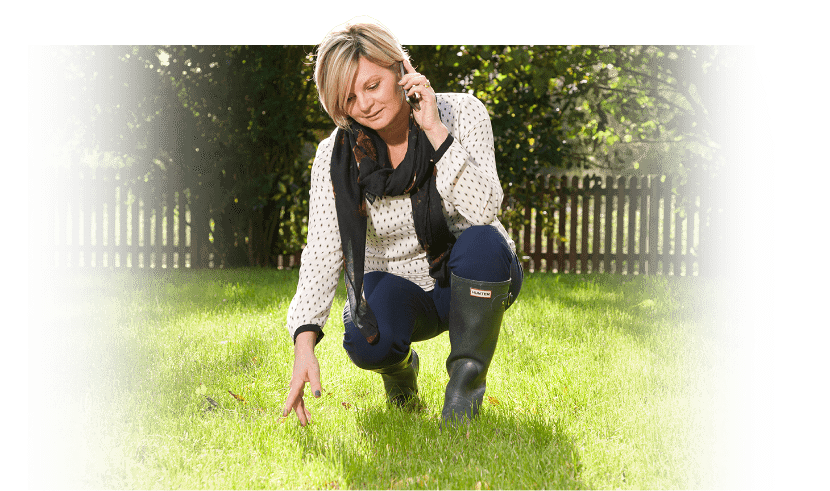
The technician walks the full lawn before touching any equipment, checking colour, density, and obvious problem zones. This takes 3-5 minutes on an average domestic garden and sets which treatment gets applied that day.

This step is where seasonal decisions get made — a lawn showing early moss in a wet corner gets flagged differently to one showing nutrient yellowing across the whole area. Skip this and you're just spraying blind. Common mistake: homeowners who mow right before the visit hide thinning patches under a fresh cut, so the technician misses what actually needs treating.

2. Soil and thatch check

On a first visit, or once or twice a year after that, the technician checks soil condition and thatch depth with a simple probe or a small core sample. This is the step most DIY lawn feeding skips entirely, and it's why shop-bought fertiliser sometimes does nothing.

Soil pH governs how well grass absorbs nutrients — a lawn sitting outside the ideal range can be fed correctly and still look starved. You can test your lawn's soil pH before treatment yourself between visits if you want to track this. Expected outcome: a clear read on whether the lawn needs correction before feeding does any good.

3. Weed and moss identification

The technician identifies which weeds and how much moss cover is present, because a single blanket spray doesn't deal with everything equally. Dandelion, clover, and moss each need different active ingredients and different timing in 2026's treatment calendar.

This matters because over-treating for weeds when the real problem is moss wastes product and delays the fix. Common mistake: treating moss in summer heat, when it's already dying back naturally, and assuming the treatment worked.

4. Treatment application

This is the core of the visit — fertiliser, weed control, or moss control gets applied using a calibrated spreader or sprayer, walked in straight, overlapping passes across the whole lawn. A domestic lawn of 200-300 square metres typically takes 10-15 minutes to cover properly.

Even, calibrated coverage is what separates a professional lawn treatment from a bag of feed from the garden centre — missed strips show up as striping within a fortnight. Expected outcome: a lawn that looks untouched on the day, with colour change following over the next 10-14 days.

5. Aeration or scarification, if scheduled

On visits booked specifically for it, the technician runs a hollow-tine or spike aerator, or a scarifying rake, over compacted or thatch-heavy areas. This isn't part of every routine feed — it's a separate mechanical step that needs its own visit slot, usually spring or autumn.

If you're not sure whether your lawn is due, the signs are compaction, standing water, or a spongy feel underfoot — covered in how to know when to aerate your lawn. Common mistake: booking aeration in the middle of a dry summer, when hard, baked soil barely lets the tines penetrate.

6. Seeding, where thin patches need it

Where the walkover found bare or thin patches, overseeding gets worked in during the same visit or scheduled as a quick follow-up, depending on the season. Seed needs consistent moisture for 10-21 days to germinate, so this step is timed around rainfall and temperature, not just convenience.

Expected outcome: visible green shoots within 2-3 weeks in warm, damp conditions; longer in cooler spells.

7. Clean-up and aftercare notes

Before leaving, the technician clears any spilled product off paths or patios and leaves a short note — verbal or written — on what was applied, what to expect, and what you should avoid doing in the days that follow. This is the step homeowners forget to ask about, and it's the most useful ten seconds of the whole visit.

Book your next lawn treatment visit

Get a tailored treatment plan for your lawn’s condition in 2026.

Troubleshooting common concerns

It rained right after the visit. Light rain within a few hours of a granular feed usually helps it settle in; heavy rain within an hour of a liquid weed treatment can wash it off before it's absorbed, so flag this to the technician if it happens.

The lawn looks no different after a week. Weed and moss treatments take 10-14 days to show visible change — a lawn that looks identical after 2-3 days isn't a failed treatment, it's normal.

Pets got onto the lawn too soon. Most treatments need a drying window before pets are safe on the lawn again; check the specific guidance given on the day rather than assuming a blanket 24 hours.

Moss came back within a month. Moss control kills what's present, but it doesn't fix the shade or drainage causing it — persistent moss on a waterlogged lawn needs moss control for waterlogged lawns alongside the treatment, not instead of it.

You mowed the same day as the visit. Mowing straight after a feed can pull granules or spray off before they've had time to work — leave 2-3 days either side where possible.

Yellow blotches appeared after weed control. Isolated yellowing where weeds were killed is expected and fades as the grass fills in; blotching across the whole lawn is worth a call back to the technician.

Tools and resources

What to do next

Once you know what a single visit covers, the next question is timing across the year. A spring lawn care programme sets out how feeding, weed control, and mechanical work like aeration fit together across 2026 rather than as one-off fixes.

FAQ

How long does a professional lawn treatment visit take?

A standard domestic lawn treatment visit takes 20 to 40 minutes, covering a walkover, treatment application, and a short aftercare note. Larger gardens or visits that include aeration or scarification take longer.

Do I need to be home during the lawn treatment visit?

No, most lawn treatment visits don’t require you to be present, but pets should be kept indoors and the lawn should be clear of toys and furniture. Leaving a note about problem patches helps if you’re not around to point them out.

How soon can I mow after a lawn treatment?

Wait 2-3 days after a feed or weed treatment before mowing, so the product has time to work into the leaf and soil. Mowing too soon can cut off or wash away product that hasn’t been absorbed yet.

When will I see results after a lawn treatment visit?

Colour and density changes from feeding usually show within 10-14 days, and weed dieback follows a similar timeline. Moss control and seeding can take 2-3 weeks depending on weather.

Is aeration included in a routine lawn treatment visit?

No, aeration and scarification are mechanical treatments booked as separate visits, usually in spring or autumn. A routine feed or weed control visit doesn’t include either unless specifically scheduled.

What happens if it rains during or after the treatment?

Light rain within a few hours of a granular feed generally helps it settle into the soil. Heavy rain shortly after a liquid weed or moss treatment can reduce how well it’s absorbed, so timing matters.

Can I stay on the lawn while it’s being treated?

It’s best to keep people and pets off the lawn during application and for the drying window the technician specifies, often a few hours. This prevents product being tracked indoors or disturbed before it’s absorbed.

Why didn’t my lawn improve after the first treatment?

One visit corrects immediate issues like weeds or a nutrient gap, but lawns with compacted soil, thick thatch, or heavy moss usually need a sequence of treatments across a season. Soil and thatch condition checked at the first visit often explain a slow first response.

One last thing

The single biggest variable in how well a lawn treatment visit works isn't the product — it's the soil check at step two. A lawn treated correctly on soil sitting outside its ideal pH range can look barely different eight weeks later, while the same treatment on corrected soil shows a clear response within a fortnight. If your lawn has had two or three treatments in 2026 with little visible change, ask whether soil pH has actually been checked, not just assumed.

Related guides

Checkout our latest FREE Guides

Switching lawn treatment provider in 2026? Follow the 7-step handover to avoid product clash, weed gaps and scorching — plus what to ask before you switch.
How often to treat your lawn in 2026: most UK lawns need 5-6 professional visits a year, spaced 6-8 weeks apart in the growing season. Full schedule inside.
Not sure if your lawn treatment plan is working in 2026? Check colour, weed counts, thatch and soil pH the right way before writing off your plan.
See exactly what happens during a professional lawn treatment visit in 2026 — assessment, application, and aftercare, step by step from Lawnscience.
Lawn treatment report explained line by line for 2026 — soil pH, thatch, weed ratings and what each recommendation means for your next visit.
Lawn treatment cost UK 2026 depends on size, condition and visit count, not a flat rate. See what actually drives price before you request a quote.
The best lawn treatment for show lawns in 2026 starts with a soil pH test, not a quick feed. See the ranked plan, timing, and what to skip before judging day.

Checkout our latest FREE Guides

Switching lawn treatment provider in 2026? Follow the 7-step handover to avoid product clash, weed gaps and scorching — plus what to ask before you switch.
How often to treat your lawn in 2026: most UK lawns need 5-6 professional visits a year, spaced 6-8 weeks apart in the growing season. Full schedule inside.
Not sure if your lawn treatment plan is working in 2026? Check colour, weed counts, thatch and soil pH the right way before writing off your plan.
See exactly what happens during a professional lawn treatment visit in 2026 — assessment, application, and aftercare, step by step from Lawnscience.
Lawn treatment report explained line by line for 2026 — soil pH, thatch, weed ratings and what each recommendation means for your next visit.
Lawn treatment cost UK 2026 depends on size, condition and visit count, not a flat rate. See what actually drives price before you request a quote.
The best lawn treatment for show lawns in 2026 starts with a soil pH test, not a quick feed. See the ranked plan, timing, and what to skip before judging day.
Request a Call back

Enter your details below to request a call back from us.

    Owning and running my Lawnscience Franchise is the best career move that I have ever made, and I wish I had done it 10 years ago! Nigel Bishop
    These are the questions that our customers ask most frequently.
    What our clients say...
    Felt sure the only remedy for our new house builder's lawn was to rip it up and start again! Lawnscience showed us other potential less drastic options and has made them a reality. Glad we consulted Lawnscience then, and very happy to continue to use…
    Mr Kenward
    What our clients say...
    Really friendly and knowledgeable team. My lawn was full of moss and weeds. Now It looks like a lawn should do. Green, lush and healthy.
    Trevor Dealey
    What our clients say...
    Lawnscience are always prompt and helped me keep on top of treatments for a newly laid lawn. Certainly takes the hassle away of burning grass etc when trying to add treatments yourself. Very good value for money. Nice guy.
    Mr Hamilton
    What our clients say...
    1st class service. Very knowledgeable on lawn care and how to improve our garden. Provided a course of action and a timetable to work to keep expectations high. Grass scarified and reseeded with great results
    Mr Murray
    What our clients say...
    Lawnscience provide a service of feeding the grass and killing the weeds and moss that are in all lawns. The treatment varies depending on the time of year. By using Lawnscience a minimum of four times a year our lawns have shown a vast improvement.
    Mr Knight
    Lady assesses lawn
    Request a Call back

    Enter your details below to request a call back from us.